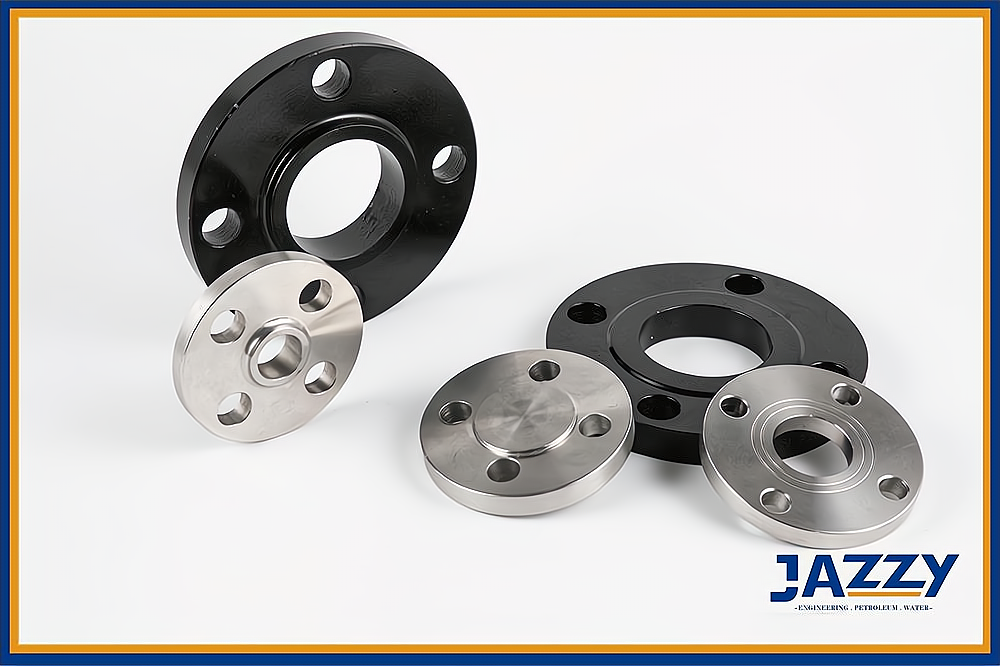
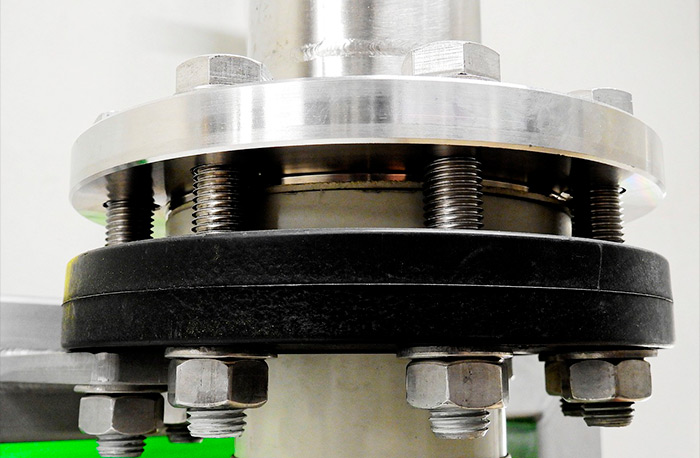
Forged flanges are critical mechanical components in engineering and plumbing, designed in the form of a ring or disc to connect pipes, valves, and other equipment in industrial systems.
They are manufactured through a forging process, which involves shaping the metal at high temperatures, significantly improving their mechanical properties such as strength and durability. This makes them ideal for applications that must withstand high pressures and temperatures.
Regarding applications, forged flanges are used in a wide range of industries, including petrochemical, energy, and construction, where the integrity and safety of connections are essential. Their design allows for effective sealing, minimizing leakage risks and ensuring the safe operation of the system.
Additionally, these connection pieces are classified according to various international standards, ensuring their compatibility and performance across different applications. This includes the selection of materials, which can range from carbon steel to stainless steel, depending on the specific environmental conditions in which they will be used.
Classification of Forged Flanges
Forged flanges are classified according to international standards that guarantee the uniformity and quality of the product. Some of the most well-known standards include:
ANSI/ASME B16.5: For sizes and pressures in pipe flanges.
DIN/EN: European standard for piping systems.
API: Specifications for the oil industry.
Furthermore, flanges are classified by their nominal pressure, known as the pressure class, which can range from class 150 to 2500, depending on the application.
Types of Forged Flanges
There are several types of forged flanges, each designed to meet the specific needs of different applications. The most common types include:
Weld Neck Flange
This type of flange has a tapered neck that is welded directly to the pipe. It is ideal for high-pressure and high-temperature applications because it provides a strong connection and reduces stress at the joint.
Slip-On Flange
These flanges slide over the end of the pipe and are welded both inside and outside to ensure a secure seal. They are easy to install and cost-effective but not as strong as weld neck flanges.
Threaded Flange
Designed with internal threads, these flanges are screwed directly onto the pipe. They are ideal for low-pressure systems and do not require welding, making installation and maintenance easier.
Blind Flange
This type of flange has no central hole and is used to close or block the end of a pipe or system. It is common in pressure testing and maintenance because it allows easy access to the closed system.
Lap Joint Flange
These flanges are used with a loose end or “stub end.” They are ideal for systems that require frequent disassembly because they allow easy alignment and reuse of the flanges.
Orifice Flange
Specifically designed for flow measurement systems, these flanges have holes that allow the installation of orifice plates or measurement instruments.
Socket Weld Flange
These flanges have a recess where the pipe is inserted before welding. They are ideal for high-pressure systems with small-diameter pipes.
Each type of flange has specific applications depending on system conditions, such as pressure, temperature, and fluid type. Proper selection is key to ensuring the safety and efficiency of the industrial system.
Materials Used in Forged Flanges
Forged flanges are primarily made from metal materials that offer high mechanical strength and durability, making them ideal for demanding industrial applications. The composition of these flanges varies depending on the material used, selected based on operating conditions such as pressure, temperature, and fluid type. Below are the most common materials:
Carbon Steel
It is one of the most widely used materials in the manufacture of forged flanges due to its high strength and low cost. A typical example is ASTM A-105 steel, which is suitable for high-pressure applications and moderate temperatures.
Stainless Steel
This material, such as AISI F304, F304L, F316, and F316L, is ideal for corrosive environments or where higher chemical resistance is required. Stainless steel flanges are common in the food, pharmaceutical, and petrochemical industries.
Special Alloys
For more demanding applications, such as those with extremely high temperatures or highly corrosive environments, special alloys are used. These may include nickel, chromium, or molybdenum alloys, which offer advanced thermal and chemical resistance properties.
Manufacturing Standards
Forged flanges are manufactured following international standards such as ANSI, ASME B16.5, ASTM A182, and MSS SP-44, which ensure the quality and compatibility of the materials used.
Composition of Forged Flanges
Forged flanges are designed with several key parts that perform specific functions to ensure a safe and efficient connection in pipe systems. The main components are as follows:
1. Flange Body
The flange body is the flat, circular part of the flange that contains the holes for bolts. It is the main component that allows connection between two elements of the piping system. Its thickness and diameter vary depending on the pressure and pipe size.
2. Neck
In weld neck flanges, the neck is a tapered extension that connects directly to the pipe through welding. This design reduces stress at the joint and enhances resistance to pressure and temperature.
3. Bolt Holes
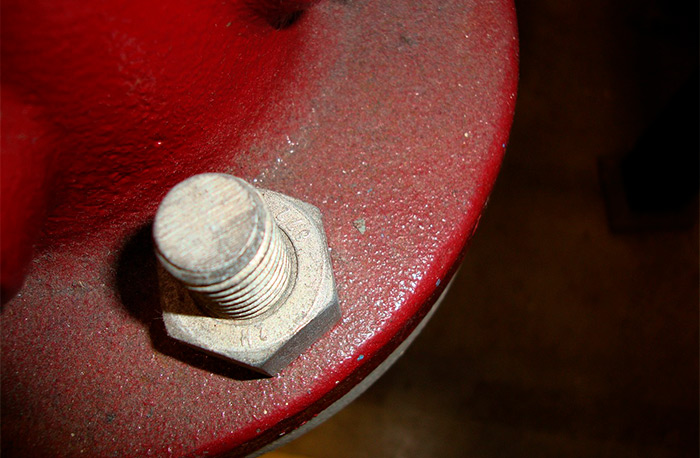
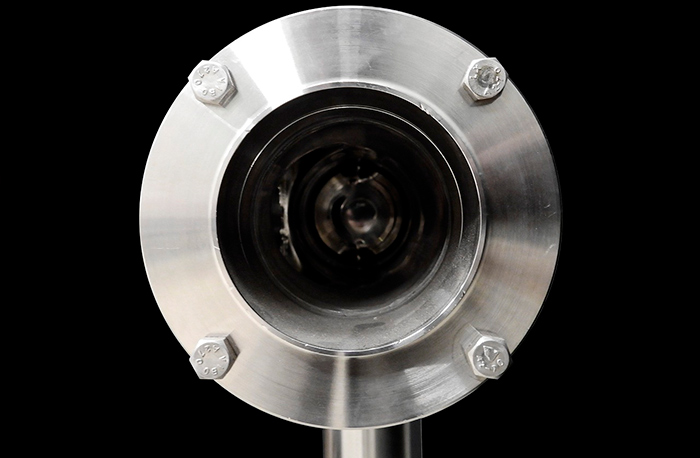
Flanges have a series of holes evenly spaced around the body, through which bolts are inserted to join the flanges. The diameter and number of these holes depend on manufacturing standards and flange size.
4. Flange Face
The face is the surface of the flange that contacts the gasket to form the seal. There are different types of faces, such as:
Flat Face (FF): Completely flat surface, used in low-pressure systems.
Raised Face (RF): A slight elevation in the sealing area, common in high-pressure applications.
Ring Type Joint (RTJ): Designed for high-pressure and high-temperature systems, using a metal ring for sealing.
Each of these components is designed to meet international standards like ANSI, DIN, or ASME, ensuring compatibility and performance in various industrial applications. Proper selection and design of these components are essential for ensuring the safety and efficiency of the system.
Applications of Forged Flanges
Forged flanges are essential components across a wide variety of industries due to their strength, durability, and ability to withstand extreme pressure and temperature conditions. The main uses of flanges include:
Oil and Gas Industry
Forged flanges are widely used in piping systems for oil and gas extraction, transportation, and refining. Their ability to withstand high pressures and temperatures makes them ideal for these critical applications.
Petrochemical and Chemical Plants
In these industries, flanges are used to connect pipes and equipment that carry corrosive chemicals. Materials like stainless steel and special alloys are common in these applications due to their corrosion resistance.
Power Generation
In power plants, especially in steam and turbine systems, flanges are used to connect high-pressure and high-temperature pipes. Their robust design ensures system safety and efficiency.
Food and Pharmaceutical Industry
In these industries, where hygiene and corrosion resistance are essential, stainless steel forged flanges are critical for connecting pipes and equipment that handle sensitive liquids or gases.
Marine and Shipbuilding
Flanges are used in ship piping systems and offshore platforms, where they must withstand highly corrosive environments and extreme conditions.
Plumbing and Civil Engineering
In plumbing and civil engineering applications, flanges are used to connect pipes in water, gas, and sewage systems, providing secure and durable connections.